
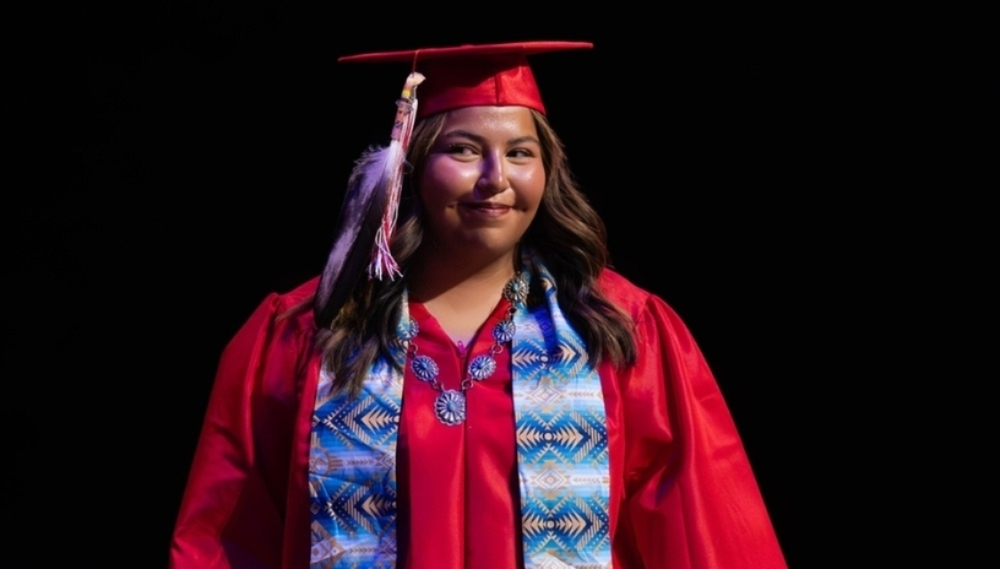
Seven graduating Native American seniors from Alpine School District schools were presented with sacred bald eagle feathers to wear at their upcoming commencement ceremonies.
These feathers are not just decorative pieces but symbols of sacred tradition, ancestral strength, and extraordinary community service.
A Symbol of Honor and Accomplishment
“Students were selected based on their service to the Native Community and their activity within the Title VI Native American Program,” said Ann Marie Sherman, Title VI Director at Alpine School District. “Other factors were their academic history and involvement in extracurricular activities.”
The students honored are:
Eva Roark, Chickasaw Nation; Cedar Valley High
Kiley Hoshnic, Navajo Nation; Orem High
Zoe Lomavaya, Navajo, Hopi and Kiowa; American Fork High
Olivia Bishop, Navajo Nation; American Fork High
Shawna Walker, Omaha, Navajo Nation, and Hopi; Cedar Valley High
Marc Platero, Navajo; Skyridge High
Gabe Marriott, Navajo; Westlake High
Students graduating from Alpine School District Schools often wear cultural regalia and objects of religious and cultural significance with their graduation attire, a practice that is protected by Utah law and district policy.
For these students, the eagle feather is a mark of accomplishment that follows a deep tradition in all Native cultures.
“Eagle feathers have been and are currently used in cultural ceremonies, marriages, naming ceremonies, dance regalia, and to honor someone for an accomplishment, " explained Sherman.
For Zoe Lomavaya, a senior at American Fork High School, the feather also represents the people who have helped her along the way.
“The feather helps me remember the people who supported and guided me. It represents the love, encouragement, and strength they gave me to help achieve my goals,” she said.
Sacred Craftsmanship and Deeper Meaning
This is the first time Alpine School District has bestowed students with an eagle feather.
“I used my tribal membership to apply for the feathers, and I waited a year and a half before they arrived,” said Sherman. “When I opened the box, I was stunned by their beauty."
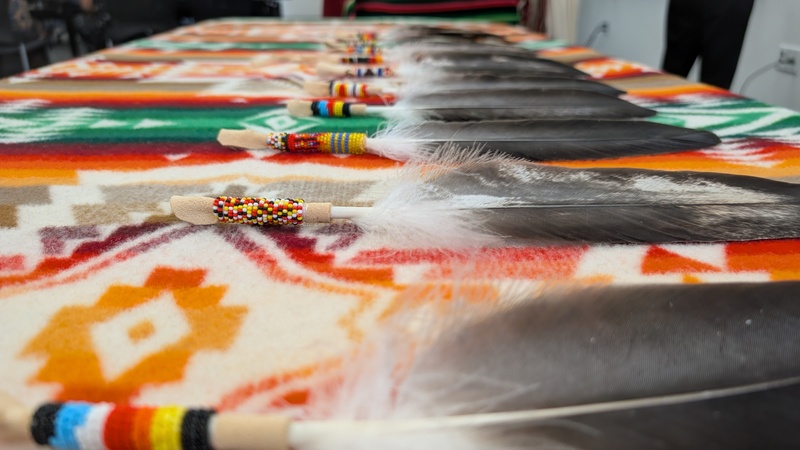 After receiving the feathers, Sherman and a group of Native women who are members of the Title VI Native American Parent Committee beaded the feathers, a process that takes about two hours for each feather.
One by one, students were invited to receive their feathers. DeAnna Yellowhair, a Title VI parent committee member explained the significance of the feathers and presented them ceremonially to the students.
For each student, she placed the feather in their hands and took it away, until the fourth time.
“The number four is sacred because it represents the four sacred directions and the belief that completing an action four times establishes spiritual balance, completion, and harmony,” said Yellowhair.
She then described to students the importance of taking care of their feather and remembering what it means.
“The most memorable part was when Ann Marie gave the speech explaining why I received it,” said Lomavaya. “Hearing her words made the moment feel very special and meaningful to me.”
Cultural Maintenance and Community Building
The feathers instill a deep appreciation for the accomplishments of the students who earn them, according to Sherman.
“When students wear traditional regalia during graduation, I’m proud of them,” said Sherman. “Their traditional attire is an outward expression of their connection to their family roots and culture.”
Those expressions strengthen the community and the values that underpin it, specifically education.
The Title VI: American Indian Education Program helps school districts support Native students. Title VI programs are funded through the Elementary Secondary Education Act (ESEA) to those school districts who have a high concentration of Native students.
“I teach my children so they will know their culture and the meaning of why we do what we do,” added Yellowhair.
For graduates like Lomavaya, the feather connects her past with her future.
“I would like to thank my mom, grandma, grandpa, and all of my family for always being so supportive and encouraging throughout my journey,” she said.